
Cambridge Heavy Industries (CHI), an emerging developer of advanced fusion technology, has officially stepped out of stealth mode to announce the successful completion of a $6.2 million seed funding round. The fresh capital infusion is earmarked for the construction of the company’s first compact fusion reactor at its Massachusetts facility. By shifting away from the colossal infrastructure traditionally associated with nuclear fusion, CHI aims to radically reduce both the physical size and the capital expenditure of conventional laser-based systems, offering a modular, benchtop-scale approach to clean energy research and isotope production.
Founded in 2025 as a spinout from the Massachusetts Institute of Technology, CHI was established by a team of visionary co-founders, including CEO Dr. Yun Kai, Raffi Freeman, Professor Keith Nelson, and Dr. Steve Kooi. The company’s core technical framework centers on developing compact, laser-based fusion systems. While the long-term objective remains the generation of commercially viable fusion energy, the startup’s immediate roadmap focuses on producing tritium and other rare isotopes using commercially available lasers and modular, benchtop-scale technology.
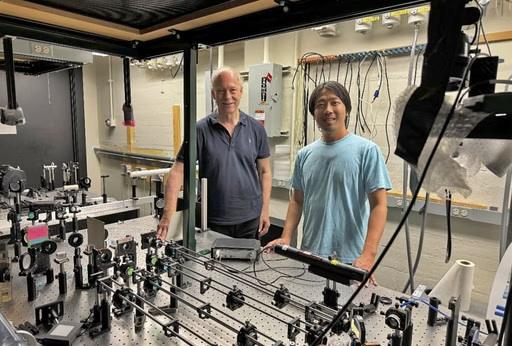
Unlike traditional magnetic confinement or massive inertial confinement fusion facilities that require years of design, construction, and iteration, CHI’s technology is engineered to dramatically accelerate development cycles. According to the company, its modular platform allows for weekly testing and rapid hardware upgrades. This nimble approach starkly contrasts with the multi-year research and development timelines that have historically characterized the broader nuclear fusion sector, potentially lowering the barrier to entry for commercialization.
At the heart of Cambridge Heavy Industries’ technological edge are significant advancements in shockwave science. The company reports that these innovations enable compression efficiencies up to 400 times higher than previous laser-based fusion approaches, and they do so at a fraction of the standard capital cost. Demonstrating the viability of this approach, the company’s current prototype—which occupies a physical footprint roughly the size of just two dinner tables—has successfully achieved staggering pressures of 350 gigapascals while utilizing only tens of millijoules of energy.
While generating limitless clean energy is the ultimate horizon for the fusion industry, CHI has devised a pragmatic commercial strategy for its near-term operations. The company’s initial systems will concentrate heavily on the production of tritium, a rare and radioactive isotope of hydrogen that serves as an essential fuel source for experimental fusion research reactors globally. Tritium currently faces acute international supply shortages, driving market prices to approximately $33 million per kilogram. By stepping into this supply gap, CHI aims to generate immediate revenue while supporting the broader fusion ecosystem. Furthermore, the company has identified promising secondary applications for its proprietary neutron sources, including material defect engineering and advanced neutron imaging for industrial and scientific uses.

The newly secured $6.2 million in seed funding will provide the financial runway necessary to bring CHI’s laboratory concepts into physical reality. A significant portion of the capital will be deployed directly at the company’s Massachusetts facility to construct its premier compact fusion reactor. This buildout will include the procurement of a high-performance ultrafast laser, specialized optical components, and advanced neutron diagnostics. Additionally, the funding will enable CHI to expand its engineering and scientific teams to support its accelerated testing schedule.
Dr. Yun Kai, co-founder and Chief Executive Officer of Cambridge Heavy Industries, emphasized the critical industry bottleneck that the company’s technology is designed to alleviate. He noted that leaders in the fusion power space are currently grappling with a severe tritium supply deficit that threatens to throttle the growth and momentum of the entire sector. By positioning its technology to solve this foundational challenge, CHI hopes to become an indispensable enabler for the global clean energy transition. He also expressed deep appreciation for the financial and operational backing provided by the company’s investors during this pivotal milestone.
The seed funding round was spearheaded by Azolla Ventures, a prominent venture capital firm focused on climate technology and sustainable innovation. The financing also saw robust participation from a diverse syndicate of investors, including Overlay, the Mass Clean Energy Center, the Neta Foundation, the Rothrock family, and P3A.

Matthew Nordan, co-founder and General Partner at Azolla Ventures, highlighted the distinct manufacturing and testing philosophy that attracted his firm to the enterprise. He pointed out that Cambridge Heavy Industries possesses a rare technological capability: its systems can be demonstrated directly on a benchtop and assembled within days using standard, readily available optical components. Nordan likened this methodology to the rapid test-fail-fix iterative model that successfully birthed modern space exploration and defense technologies, asserting that venture capital views this agile framework as a highly promising pathway toward making nuclear fusion commercially viable.