
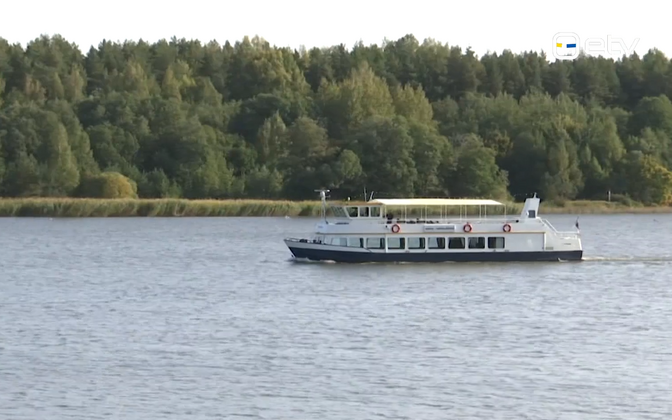
A popular passenger ferry service that has connected communities along the Narva River for the past half-decade is now facing the very real possibility of permanent closure. The future of the riverboat Caroline, a fixture of regional tourism and transit between Narva and the coastal resort town of Narva-Jõesuu, has been thrown into jeopardy after regulatory authorities determined that the vessel is simply too large for the existing classification and infrastructure of the Port of Narva.
The operational crisis comes on the heels of the Caroline completing its final scheduled sailing of the season in late September. Having wrapped up operations for the autumn, the riverboat was moved and is currently docked at the Port of Sillamäe. However, where the vessel will go next and where it will safely spend the winter months remains entirely unclear, leaving both its owners and local commuters in a state of anxious limbo as the off-season sets in.
The root of the ongoing dispute was uncovered during a routine regulatory review. The Estonian Transport Administration recently conducted a thorough port inspection of the facilities in Narva and made a startling discovery: the municipal river port is officially registered only as a small craft harbor, yet the Caroline exceeds the strict dimensional thresholds permitted under that specific classification. Consequently, the entire operational framework supporting the ferry service has been called into question.
Elaborating on the findings of the inspection, Kert Süsmalainen, head of the Transport Administration’s waterways and ports department, explained the precise nature of the administrative discrepancy. "The Transport Administration conducted a port inspection and found that Caroline is not a small vessel, but the port is registered as a small craft harbor. The port must change its registration. The harbormaster must also hold a license to operate larger vessels rather than just a small craft operator’s license," Süsmalainen stated, highlighting the dual hurdle of updating both facility documentation and professional staffing credentials.
The revelation that the vessel has been operating outside of its permitted parameters for years has raised questions regarding oversight. According to the Transport Administration, the fact that the Caroline had previously utilized the Port of Narva for five years without encountering any official resistance or administrative hurdles was simply the result of an oversight by the port operator. When the vessel was first brought to the region half a decade ago, its length was measured strictly at the waterline. However, subsequent verification revealed that the Caroline’s actual overall length exceeds the permitted regulatory limit for the facility by 120 centimeters—a small margin physically, but a massive legal and administrative barrier under maritime law.
In response to the regulatory roadblock, the City of Narva has scrambled to find a swift resolution to keep the vital connection alive. Local municipal authorities have already taken steps to address the administrative shortcomings, successfully amending the port’s official registration to reflect a higher category of use. Additionally, plans are actively being drawn up to establish a proper passenger waiting area to comply fully with modern transport infrastructure standards.
Despite these municipal efforts to correct the paperwork, finding a qualified professional to run the port operations according to the new legal requirements is proving to be an exceptionally difficult hurdle. The specialized licensing demands for a harbor accommodating larger vessels mean that the city cannot simply pull from its existing local talent pool.
Kaspar Eisel, the owner of the Caroline, voiced deep concern over the logistical and financial implications of the mandatory staffing changes. Eisel noted that the search for a certified professional is fraught with practical obstacles, particularly in northeastern Estonia’s unique linguistic and economic landscape.
"It’s clear that there are no people with those qualifications in Narva. Language proficiency is another obstacle. Our concern, of course, is that if a harbormaster is hired solely because of our vessel, their entire annual salary costs will likely be passed on to us through port fees. That, in turn, raises the question of whether we can make the numbers work," Eisel explained, pointing to the delicate economic reality of running a regional passenger transit business.
The administrative headache comes at a particularly vulnerable time for the ferry service, which is already grappling with a steep decline in ridership. Operating the Caroline on the Narva River has become increasingly challenging from a commercial and financial standpoint over the past several years. While the riverboat enjoyed robust public interest in its early years, regularly carrying around 10,000 passengers per season, those figures have plummeted dramatically. During the most recent summer season, the vessel transported just under 3,000 passengers, putting immense pressure on the business model.
Whether the Caroline will be able to return to the Narva River for the upcoming summer season—and under what precise financial and operational conditions that return might occur—remains entirely dependent on the outcome of upcoming negotiations between the vessel’s ownership and the management of Narva’s river port.