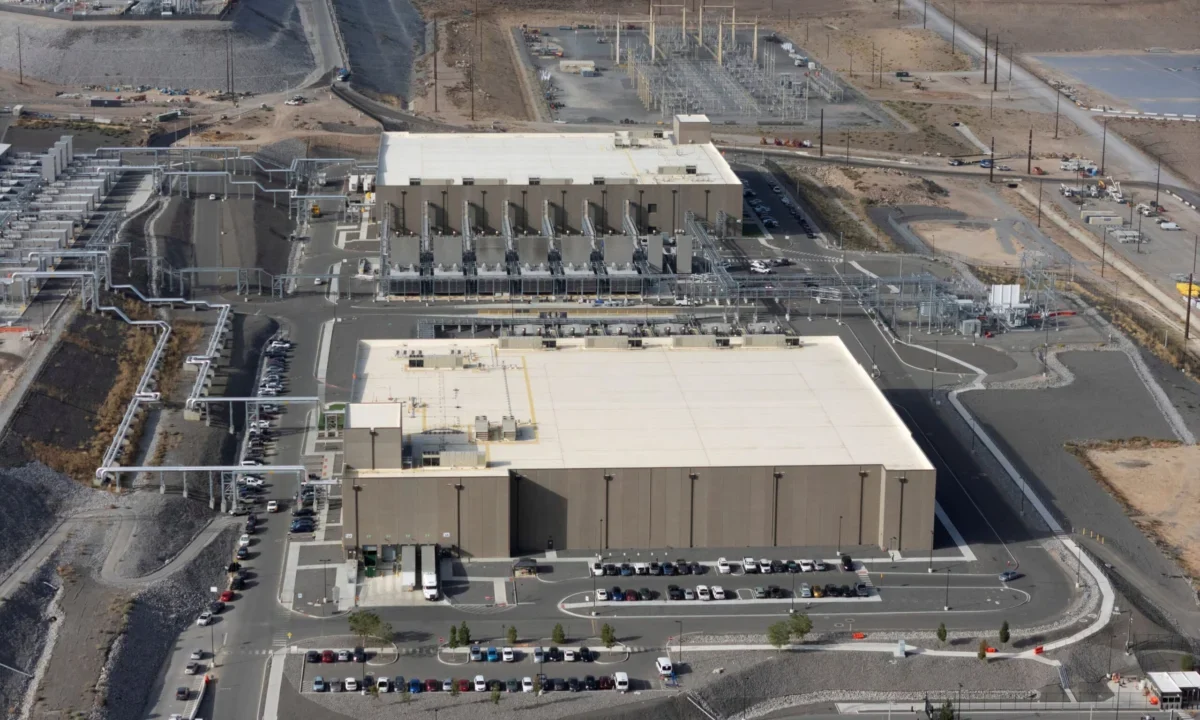
Fears over artificial intelligence debt have eased slightly following a recent bout of market volatility, but major tests for the sector’s financial health are looming. As massive capital expenditures continue to reshape the technology landscape, Wall Street is turning its attention to upcoming corporate updates that will determine whether investor anxiety over infrastructure spending is justified or overblown.
Oracle is set to hold its Investor Day on Wednesday, providing a crucial update on its financial strategy. Meanwhile, major cloud hyperscalers Alphabet and Amazon.com are scheduled to report their quarterly financial results after the market close on Wednesday and Thursday, respectively. These updates come at a delicate time for credit markets, which remain on edge regarding a historic flood of AI-related debt issuance, even though immediate pressure has begun to subside.
The recent relief in credit markets was largely sparked by Meta Platforms. On Monday, Meta announced plans for a $95 billion stock offering, a move that helped bring down its credit-default swap (CDS) spreads. Those spreads had spiked just last week after the social media giant reported negative free cash flow for the third quarter. Across the broader technology sector, other CDS spreads had also moved higher, though most have since backed off their recent peaks.
Investors had initially anticipated that Meta would bring a massive bond deal to market shortly after its earnings announcement, according to Richard Cheng, head of Nuveen’s investment-grade corporate sector team. The fact that a major bond issuance was not announced alongside the earnings report came as a significant relief to the credit market.
"Just the absence of the bond deal itself is a direct catalyst for AI-related spread tightening," Cheng noted.
A credit spread measures the difference in yield between corporate bonds and U.S. Treasurys of similar maturities. When these spreads tighten, it signals that fixed-income investors are growing more confident in the financial stability and creditworthiness of the bond issuer.
Fears ‘Overblown’
The recent market action demonstrates that investors are beginning to recognize that credit fears may have been exaggerated, according to Paul Meeks, a CNBC contributor and head of technology research at Freedom Capital Markets.
"I expect that these better feelings, maybe not good but better, may continue as companies announce their quarters over the next few weeks," Meeks said.
Despite the recent pullback in credit-default swaps, spreads across the sector remain wider than they were a year ago. This elevation reflects a continuous surge in corporate debt issuance and free cash flows turning negative across the artificial intelligence space. Meta’s CDS spread, for instance, remains up 177% for the year to date, while Amazon’s spread has recorded a gain of 129%. At the same time, broader bond yields across the economy remain elevated.
According to CreditSights analyst Jordan Chalfin, the current market environment is not being driven primarily by underlying fundamental deterioration. Instead, market movements are heavily influenced by technical factors and shifts in investor sentiment.
"It’s not necessarily fundamentals," Chalfin said. "It’s more, I’d say, 80% driven by technicals and sentiment."

Earnings in Focus
Alphabet and Amazon pose the next significant hurdle for technology sector bonds as both companies update investors on their capital expenditure plans and free cash flow forecasts. Microsoft’s earnings are also due on Wednesday, though the software giant has managed its AI infrastructure spending differently and has yet to issue bonds specifically dedicated to funding its artificial intelligence initiatives.
Both Amazon and Alphabet reported negative free cash flow in the second quarter of the year, and Wall Street analysts expect that challenging trend to continue in the third quarter. FactSet consensus estimates indicate that Alphabet is expected to report free cash flow of negative $2.3 billion while spending $55.2 billion on capital expenditures. Amazon, meanwhile, is projected to report negative free cash flow of $9.9 billion against anticipated capital expenditures of $58.7 billion.
These staggering figures align with broader industry projections. In an August report, S&P Global Ratings estimated that the major hyperscalers will generate negative free operating cash flow across both 2026 and 2027 as they race to build out infrastructure.
For fixed-income investors, however, the backward-looking cash flow numbers may take a backseat to forward-looking guidance. Cheng emphasizes that the singular focus on investors’ minds is the trajectory of capital expenditure guidance across the hyperscaler ecosystem.
Meeks maintains a bullish perspective on the spending spree, arguing that elevated capital expenditures are a direct sign of robust, enduring demand for artificial intelligence capabilities. The hyperscalers have determined through proprietary data that this heavy spending is not merely worthwhile, but fundamentally required, he suggested.
Chalfin does not expect the major hyperscalers to announce massive new bond issuances directly tied to their upcoming earnings reports. Instead, Oracle’s upcoming business updates may prove more critical for the credit markets. Oracle has accumulated $117 billion in long-term debt and is currently clinging to a BBB- investment-grade credit rating from S&P Global Ratings, representing the lowest possible tier of investment-grade status before crossing into high-yield territory.
"It’s the most important IG tech credit, just given how it’s a bit more stressed relative to the A-rated names," Chalfin said. "It’s trading more like a high-yield credit, even though it’s IG, and so there’s just a lot of investor concern on that one."
Off-Balance Sheet Debt
Adding complexity to the broader AI debt narrative is the reality that standard corporate balance sheets do not always reveal the complete financial picture. According to a September report from S&P Global, technology companies are increasingly utilizing complex off-balance sheet arrangements to finance data centers and specialized microchips, and these financial commitments lack full transparency.
"There are commitments they are entering into, for example, into data center leases or purchase commitments on chips that aren’t necessarily treated as debt," Mark Habib, digital infrastructure sector lead at S&P Global Ratings, explained during a financial media appearance. S&P is actively working to provide the market with enhanced visibility regarding these commitments to establish a comprehensive picture of the actual long-term obligations companies are taking on.
Outside of Oracle, the credit ratings of the major hyperscalers remain comfortably positioned well above A-tier levels. This strong standing reflects their broadly diversified revenue streams, ample earnings coverage for interest payments, and substantial underlying capacity to absorb additional financial leverage if management chooses to deploy it.
Nuveen’s Cheng remains unconcerned by the current market repricing, emphasizing that while volatility has picked up, there is no systemic credit crisis underway in the technology sector.
"They continue to have exceptional credit profiles, strong cash generation liquidity," Cheng said of the largest hyperscalers. "The market is really not concerned about credit quality at this point. It’s really just the trajectory of the capex needs and the supply of debt to fund that. Both of those are pointing in one direction—and that’s up."