

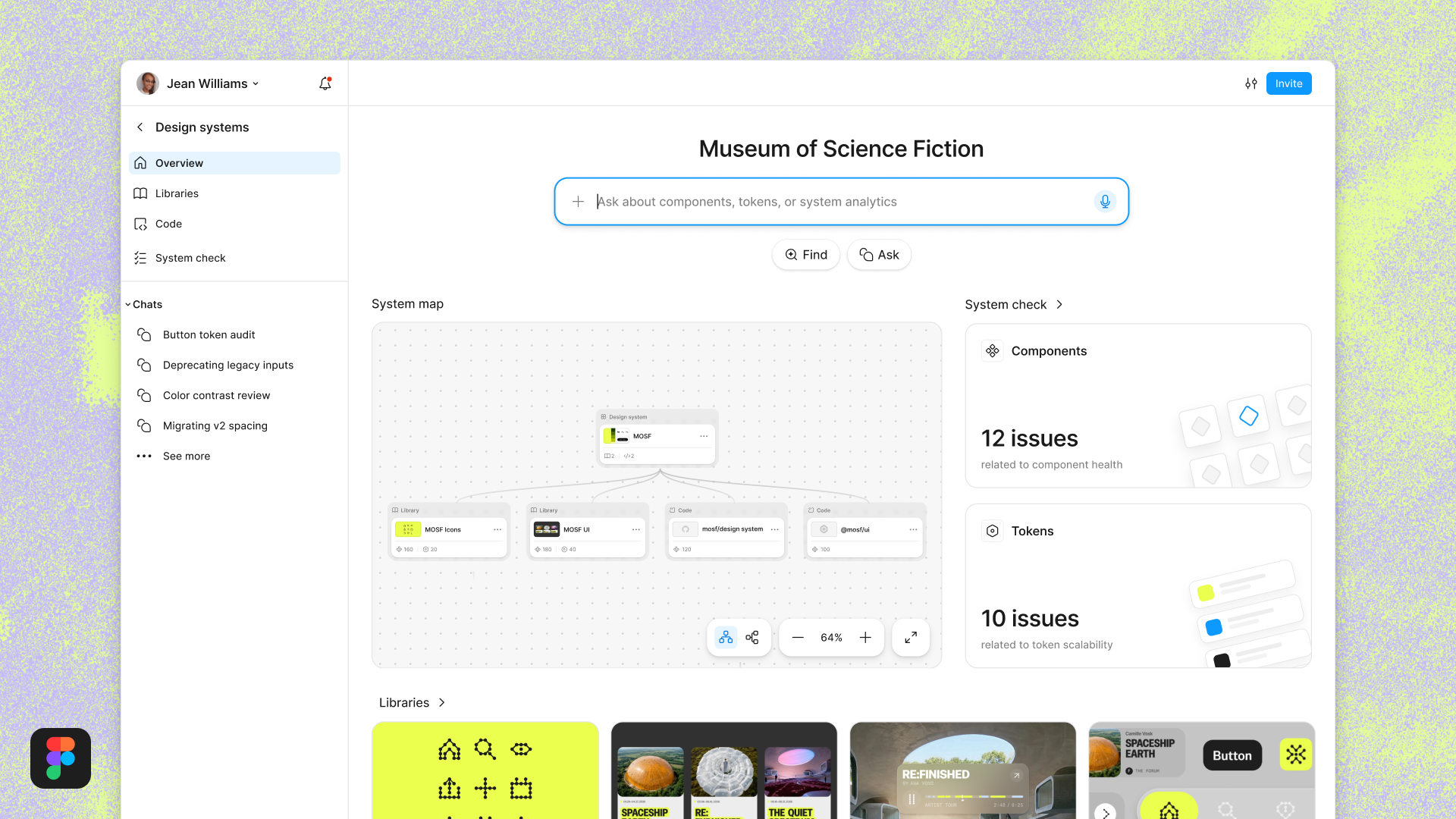
Design and collaboration platform Figma used its first-ever Config event in India to unveil a suite of powerful updates aimed at bridging the gap between design and development. Central to these announcements is a new Markdown-based editor called Figma Specs, designed to help organizations define their design languages, integrate code and design libraries, and streamline integration with the Payload headless content management system.
By introducing these structured organizational tools, Figma aims to give both its native canvas agents and third-party AI systems a reliable, centralized source of truth. The ultimate goal is to ensure that generative AI tools adhere strictly to a brand’s specific design rules and visual guidelines when building digital products.
The debut of Figma Specs introduces a versatile Markdown editor that allows teams to formally document their design systems in a clean, straightforward manner. This living document can serve as a definitive reference for human design teams and automated AI agents alike as they collaborate within Figma. Specs can be maintained as a standalone file or integrated directly onto the active canvas.
Beyond acting as a traditional text editor, the feature enables users to seamlessly reference other Figma elements scattered across the canvas, embed FigJam diagrams, and link directly to code layers and complex design assets.

Furthermore, product and engineering teams can consolidate broader contextual layers—such as comprehensive design libraries, code repositories, and brand guidelines—into a centralized ecosystem. Because generative AI tools can occasionally behave in non-deterministic ways, providing this rigid context allows teams to steer automated agents toward much more predictable, brand-compliant outcomes. This capability builds on Figma’s recent efforts to roll out its on-canvas agent to a broader user base, giving creators tighter control over automated workflows.
Alongside Figma Specs, the platform is advancing its code layers feature into a public beta. First introduced in a private beta back in June, code layers allow designers to incorporate actual code directly into canvas designs, facilitating the creation of richer, highly interactive prototypes.
With the feature now entering public beta during the Config event in India, a wider audience can test its capabilities. Users can prompt the integrated AI agent to convert a standard visual design directly into code, or request specific modifications to existing code snippets to rapidly iterate on prototypes.
The strategic push toward code integration reflects a broader shift in how modern software teams operate. According to Figma Chief Design Officer Loredana Crisan, the fundamental nature of software development has been radically altered by the advent of artificial intelligence.
"We see Figma as the place where software teams come to decide what they build and ship. And so for that, I think one of the key things to keep in mind about what AI has changed and what it made available is the ability to build," Crisan said.

Highlighting a growing disparity between generation and deployment, Crisan noted that teams are producing vastly more code today than ever before. "There are 17-times more lines of code being produced today than in the past. But when you’re looking at releases, only 1.3-times more releases. A lot of that code actually is not necessarily built to ship, but really built to discover what the product is. It’s built to design."
To further expand its ecosystem integrations, Figma announced that its Model Context Protocol (MCP) now supports over 20 new tools. These additions include Open Code, Dia, Grok Bot, and Sarvam, an emerging AI startup based in India.
The company also provided fresh updates regarding Payload, the open-source headless content management system it acquired last year. Figma is actively integrating Payload with its Figma Make product, a feature built to generate dynamic websites and manage content directly from the platform. According to the company, Payload’s download numbers have surged dramatically, increasing sixfold over the past twelve months.
Figma’s decision to host its premier Config event in India underscores the country’s rising importance to the company’s global expansion strategy. Late last year, Figma established its first physical office in India, dedicated to supporting sales, partnerships, go-to-market initiatives, and product functions.
The company revealed that India currently stands as its largest user market outside of the United States. Demonstrating deep market penetration in the region, Figma noted that its platform is actively utilized by 40% of India’s top 100 companies listed on the Bombay Stock Exchange.
