The concept of "eyes on the street" remains one of the most enduring and widely referenced frameworks in architectural and urban literature concerning neighborhood security and public life. Coined by urbanist and activist Jane Jacobs in her seminal 1961 work, The Death and Life of Great American Cities, the expression refers to the natural surveillance generated by people who—whether consciously or unconsciously—use public spaces or observe them from the comfort of their homes. Within the architectural discipline, this dynamic interaction is encouraged both through the design of high-quality public realms and through the porous, intentional relationships forged between public zones and private building facades. Advocating for this continuous, daily oversight, Jacobs condemned excessive verticalization, isolated megastructures, and single-use developments that actively turn their backs on the urban fabric and deny contact with the surrounding street.

The resonance of Jacobs’ ideas extends far beyond mid-century North American neighborhoods, evolving across different scales and urban objectives over the decades. A striking international application of this philosophy can be observed in Vienna during the 1990s, where the city’s Gender Department championed a series of innovative residential complexes known as Frauen-Werk-Stadt I, II, and III. Designed deliberately through a gender-conscious lens, these housing blocks applied the principle of "social eyes" to address the daily realities of caregiving and community safety. The complexes featured facades punctuated by windows overlooking central courtyards and children’s play areas. Inside the individual apartments, windows were strategically positioned in kitchens to allow mothers to maintain visual oversight of their playing children while tending to domestic responsibilities.

This integration of active sightlines within multifamily housing complexes underscores the profound impact that thoughtful design can have on the quality of life for residents. Remarkably, despite the decades that have passed since Jacobs first published her observations, the core philosophy remains intensely relevant, sparking ongoing global debates regarding how contemporary architecture should interface with the public realm.
In contemporary Brazilian cities, however, the translation of this concept often takes on unexpected and sometimes contradictory forms. Across many residential neighborhoods throughout the country, residents frequently establish informal "shared surveillance networks," marking their territories with signs and digital imagery that pay homage to the spirit of community watchfulness. Yet, experts note that these modern defensive measures often diverge sharply from Jacobs’ original vision. Rather than fostering vibrant, inclusive street life, this localized unity against rising urban insecurity can inadvertently isolate residents, breeding insularity and deepening suspicion toward outsiders. Jacobs repeatedly emphasized that true urban safety is not merely a product of clinical surveillance, but rather the outcome of street vitality, mixed uses, and social diversity—elements essential for the health of any metropolis.
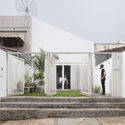
From the functional efficacy of thoughtfully crafted building thresholds to the more intrusive manifestations of neighborly policing, the dialogue surrounding eyes on the street continues to provoke intense debate among architects and urban planners. Regardless of the specific viewpoint, the overarching lesson remains clear: the profound significance of architectural elements in shaping public life hinges on the dynamic interplay between building openings and the street. Every design choice carries weight, directly influencing the social and urban fabric of a community. This underscores the necessity of remaining vigilant and intentional when conceiving residential architecture and integrating it smoothly into existing urban landscapes.

To fully understand how these global theories translate to the local context, it is helpful to examine contemporary residential architecture in Brazil through this specific lens. A closer look reveals several notable projects where the architectural envelope plays a pivotal role in negotiating a healthy, active relationship between interior sanctuaries and exterior public realms.

One prominent example is the Heliópolis Social Housing project in São Paulo, completed in 2014 within the city’s largest informal settlement. Breaking completely away from the alienating typology of isolated residential towers, the project organizes itself into dense blocks that frame accessible inner courtyards. These semi-public spaces welcome both residents and the wider neighborhood, bearing a conceptual resemblance to the social housing strategies seen decades earlier in Vienna. Furthermore, the Heliópolis project engages the street through permeable facades, ground-floor connections, and windows overlooking central gardens, actively fostering movement and casual interaction between the public domain and private dwellings.

On a smaller scale and within a horizontal typology, the Paudalho Popular Houses in Pernambuco offer another compelling model for multifamily housing. In this project, residents maintain a direct and unhindered visual connection to the street through living room windows and front doors—a notable departure from the kitchen-centric surveillance observed in European precedents. This open layout is deliberately facilitated by the use of low property walls. Additionally, the design incorporates a covered outdoor living space beneath the front porch, acting as a robust transitional interface between the private domestic sphere and the public sidewalk, a spatial tradition deeply rooted in Brazilian culture.

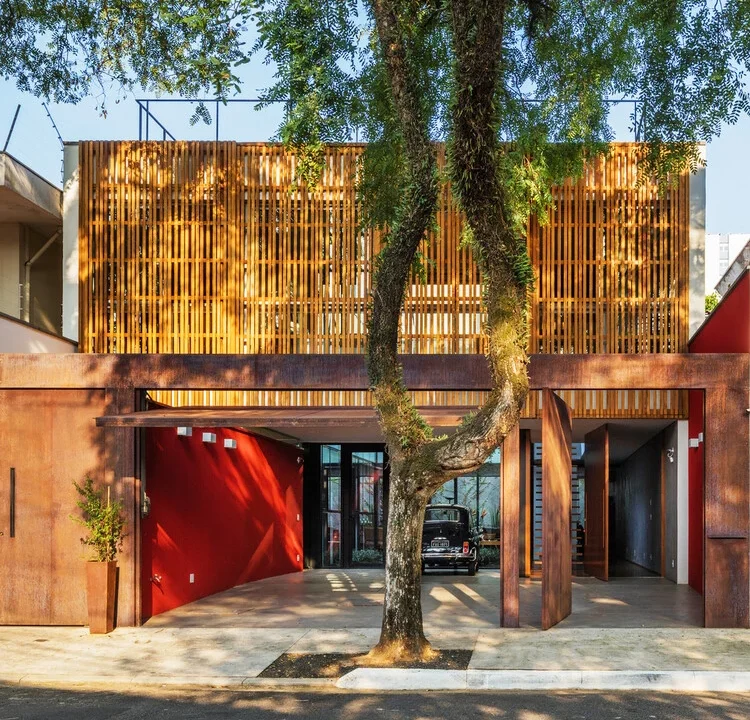
Beyond multifamily housing, various single-family homes across Brazil have explored innovative architectural solutions inspired by the spirit of Jacobs’ philosophy. In Brasília, House 711H faces directly onto a public park, utilizing retractable perforated metal panels on its primary facade. This kinetic skin allows the inhabitants to seamlessly modulate their privacy, dissolving the barrier between the private interior garden and the surrounding public green space. Similarly, Casa 4×30 in São Paulo stands out by boldly omitting the typical front wall or security fence that characterizes most urban Brazilian houses. While the ground floor maintains a degree of privacy behind a solid facade, the absence of perimeter barriers fosters an immediate, welcoming connection between the upper windows and the city streetscape.

Despite these inspiring exceptions, the prevailing trend in contemporary Brazilian residential architecture leans heavily toward disconnection from the public realm. Particularly in single-family homes situated outside of gated communities, urban security concerns—frequently amplified by restrictive zoning regulations—lead to the pervasive construction of high concrete walls, heavy gates, and defensive fortifications. This urban reality sparks ongoing debates among sociologists and architects alike regarding the necessity of breaking down physical and social barriers within the city.

Yet, amidst the continuous challenge of balancing the legitimate demands for safety and privacy with the societal need for urban integration, standout projects continue to demonstrate that thoughtful design can bridge the gap between architecture and the street. Revisiting the precepts established by Jane Jacobs provides a vital touchstone for evaluating how contemporary architects approach the built environment, reminding the profession that every window, threshold, and facade plays an indispensable role in defining the life of the city.