Despite a sharp and encouraging rise in young people expressing interest in technical disciplines, Estonia is bracing for a severe labor shortage in the engineering sector. According to projections from OSKA, the Estonian Qualifications Authority’s labor market forecasting system, the Baltic nation will face a shortfall of more than 800 young engineers over the next decade. This impending deficit is primarily driven by an aging workforce, with 40 percent of current engineers approaching retirement age and leaving behind massive shoes to fill.
While academic interest in technical fields is trending upward, education and labor experts emphasize that there are no quick solutions to the pipeline problem. Instead, long-term systemic efforts are currently underway to alleviate the looming crisis, with a heavy emphasis on overhauling how mathematics and foundational sciences are taught in the country’s schools.
The paradox of the current situation is clearly visible at Tallinn University of Technology (TalTech). Over the past three years alone, interest in studying at the university’s prestigious School of Engineering has surged by 25 percent. Fjodor Sergejev, dean of the School of Engineering, notes that prospective students are actively enrolling in a diverse array of specialized programs, ranging from energy and construction to mechanical and industrial engineering. However, despite this robust influx of enthusiastic undergraduates, the sheer volume of incoming students will simply not be enough to offset the massive wave of retirements hitting the industry.
"We need replacement workers because many engineers from previous generations are retiring and need to be replaced, but we also need to ensure the development of the sector, and for that we need even more engineers," Sergejev explains, highlighting the dual challenge facing the national economy. "Even the substantial demographic support we currently have is unfortunately unable to meet all our needs, because the replacement demand is indeed very high, in some fields even numbering in the thousands."
This sentiment is echoed across the industry by professional organizations representing the workforce on the ground. Cathy-Liis Põlluveer, president of the Estonian Association of Engineers (Eesti Inseneride Liit), acknowledges the acute shortage and points out the profound difficulties employers face when attempting to hire new talent in the current job market.
"We currently have a situation where it depends somewhat on the field, but when an engineer, particularly an experienced engineer, is being sought and a recruitment competition is held, there is practically no queue of applicants or diversity among candidates," Põlluveer states. Rather than enjoying a healthy pool of qualified professionals to choose from, hiring managers find themselves searching for specialized talent "like needles in a haystack."
According to Anneli Leemet, an analyst at OSKA, the market demand will concentrate most heavily on specific technical sub-sectors in the coming years. Growth is expected to peak for electrical and energy engineers, mechanical engineers, and electronics engineers. Furthermore, Leemet points out that solving the crisis is not merely a matter of hitting numerical recruitment targets. The modern labor market demands that graduating engineers possess a diverse and adaptable range of skills rather than narrow, single-track training.
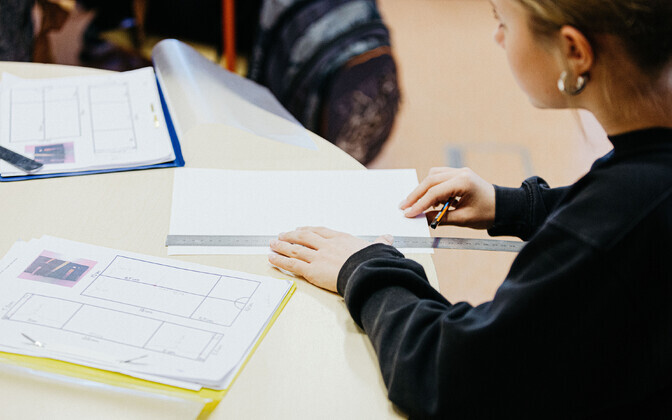
To address both the quantity and quality of future engineering professionals, education experts believe the solution lies far upstream, specifically in strengthening mathematics education starting in basic schools covering grades one through nine. Educators are advocating for a pedagogical shift that makes mathematics teaching more relevant to everyday life, better integrated with other academic subjects, and delivered in a manner that actively sustains every child’s motivation to learn.
Tiina Kraav, a lecturer in mathematics education at the University of Tartu, stresses that while there are no instant fixes, educators are continuously working to modernize and elevate the mathematics curriculum.
"Making mathematics more interesting to learn, making mathematics learning more visible, making mathematical thinking more visible to students, making mathematics learning more creative, improving how problem-solving skills are taught in the classroom, getting students to talk about what they think and how they think when solving mathematics problems—all of this will certainly help in the longer term," Kraav says.
Supporting this perspective, Põlluveer believes that educational approaches explicitly designed to bridge the gap between natural sciences and mathematics could prove highly beneficial for developing analytical thinking among younger students.
In practice, some schools are already pioneering new pedagogical methods to bring these concepts to life. Priit Laats, a teacher of technology education, arts, and technology at Tartu Raatuse School, confirms that educational institutions are increasingly moving toward theme-based learning models to keep students engaged with quantitative concepts early on.
"For example, in the first stage of basic school, there is integrated learning," Laats explains. "It is theme-based, with Estonian, mathematics, nature studies and creative subjects all together all the time. In fact, other grades should already be structured in a similar way. But again, who is going to develop all of this? It is a huge amount of work."
Describing his own approach to reinforcing mathematical thinking through hands-on technical projects, Laats notes how spatial reasoning is introduced to young children long before they reach secondary school. "If I take how I, in turn, support mathematics, we introduce 3D modeling as early as fourth grade: the spatial world, shapes, symbols, symmetry, reflection, all the faces and planes—it is all mathematics all the time, and we do this right through ninth grade."
The evolving demands placed on modern engineers will be further underscored in an upcoming cross-sector study on labor and skills needs, which OSKA is scheduled to publish in early November. The findings are expected to demonstrate that labor market competition is increasingly shifting toward "hybrid competencies." In practical terms, this means that future engineers will no longer be able to rely solely on deep specialist knowledge alone. Instead, they must seamlessly combine their core technical expertise with advanced digital literacy, data analysis capabilities, artificial intelligence proficiency, and strong business or management skills to remain competitive and drive Estonia’s technological future forward.