

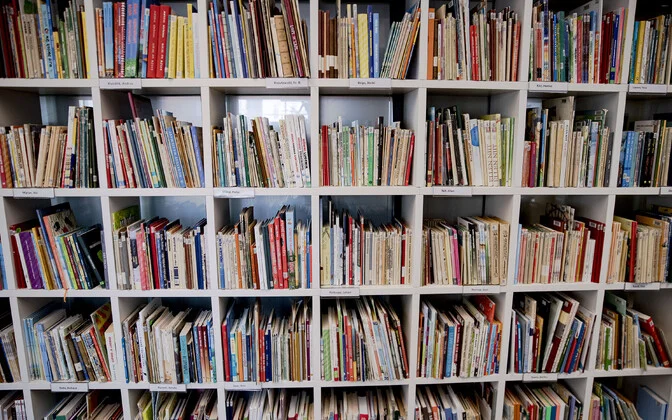
The Estonian Publishers’ Association has issued a strong and urgent open letter urging both the state and local municipal governments to elevate their focus on public libraries and national literature, positioning them not merely as community amenities, but as indispensable pillars of education, culture, and societal mental well-being.
The appeal comes in the wake of a recent announcement by the Ministry of Culture regarding state budget adjustments. According to the association, state funding allocated specifically for public libraries to purchase new books and other reading materials is set to be reduced by €100,000. Industry representatives warn that this financial contraction comes at a particularly difficult time, as the average market price of books has steadily risen across the country due to increasingly small print runs and mounting operational and production costs. Consequently, publishers argue that this budget reduction will severely impair the operational capacity of libraries to acquire fresh literary titles and maintain adequate supplies of new releases for the reading public.
In their open letter, the publishers emphasize that the ongoing and well-documented decline in deep reading habits—particularly among children and young people—represents a systemic challenge that reaches far beyond the boundaries of cultural policy alone.
"The decline in deep reading among children and young people is not merely a cultural issue. It affects vocabulary, concentration, imagination, academic performance and the ability to understand oneself and others. These skills are essential for learning, working and participating in society as informed citizens," the Estonian Publishers’ Association stressed in the statement.
To underscore the gravity of these demographic and behavioral shifts, the association pointed to the findings of the 2025 reading survey titled "Estonians Read 2025," which was co-authored by prominent sociologist and researcher Marju Lauristin. The survey highlights a pronounced and widening generational divide in reading habits. According to the data, 22 percent of individuals belonging to the 50-to-60-and-older age bracket qualify as active readers with wide-ranging and diverse literary interests. In stark contrast, only 11 percent of young people aged 15 to 24 demonstrate a comparable level of engagement with books.
The association notes that a strong, enduring interest in literature among youth typically develops in home environments where books are abundant and reading is modeled as a daily habit. Because socio-economic conditions and home libraries vary widely, public libraries play an essential leveling role. They are tasked with bridging these disparities by providing every child with free, age-appropriate reading materials, professional book recommendations, and supportive spaces to discover the joy of reading, even when a family’s personal book collection or household financial situation makes independent book ownership impossible.
Beyond serving the younger generation, the association highlights the critical role that public libraries play for readers across all age groups. For individuals living outside major urban centers far from commercial bookstores, or for those who find the retail price of newly published books increasingly prohibitive, the local library remains the primary and often only gateway to contemporary literature.
Furthermore, the open letter characterizes libraries as vibrant, vital community centers that foster social cohesion. The publishers underscored that the long-term survival and vitality of the Estonian language itself depend heavily on robust support for native-language literature and accessible public infrastructure. Ensuring this linguistic and cultural continuity, the association argues, requires stable and sufficient public funding to enable libraries to maintain up-to-date and diverse collections of newly published works. Such funding simultaneously supports domestic readers, independent authors, and local publishing houses through sustained institutional book purchases, ensuring that libraries do not quietly fade away into another disappearing public service in rural and urban neighborhoods alike.
Drawing a sharp parallel to the broader responsibilities of the state, the Estonian Publishers’ Association concluded its public appeal by framing the defense of national culture and the Estonian language as a matter of foundational security, placing it on an equal footing with traditional concepts of national defense.
"If we have no culture in our native language, what exactly are we defending?" the association asked.
