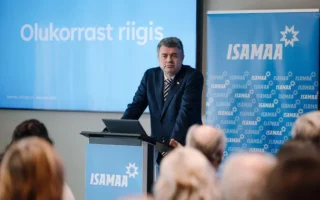
Minister of Defense Martin Herem has announced that Estonia could soon require around a dozen light fighter jets to effectively counter the growing threat of jet-powered attack drones and loitering munitions. According to the defense ministry’s timeline, a potential procurement process could take up to four years, marking a significant strategic shift for the nation’s military capabilities.
The Baltic region currently relies heavily on collective security arrangements rather than indigenous air power. The airspace of Estonia, Latvia, and Lithuania is monitored and defended under the robust framework of NATO’s Baltic Air Policing and Air Defense Mission, as none of the three Baltic states currently operate a single tactical fighter jet of their own.
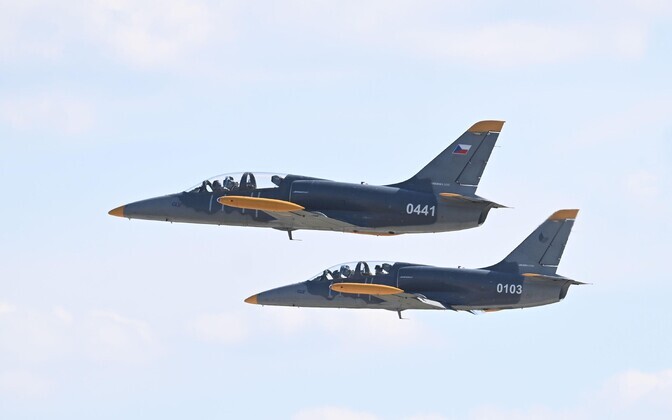
For the past fifteen years, the Estonian Air Force has relied on a pair of Czech-built L-39 light aircraft primarily for training purposes and minor operational tasks. However, the evolving nature of modern aerial warfare—highlighted vividly by ongoing conflicts—has forced defense planners to reevaluate these legacy platforms. Minister Herem pointed out that traditional, heavy-duty fighter aircraft like the F-16 are frequently deployed by Ukraine to successfully intercept and destroy nearly half of incoming aerial threats. Yet, acquiring and maintaining a fleet of high-end multirole fighters remains financially out of reach for Tallinn.
"The Ukrainians use F-16 fighter jets to destroy nearly half of them. But we certainly could not afford to go down that route," Herem explained. "However, smaller jet-powered aircraft could fulfill that role, whether manned or unmanned."
While global defense technology increasingly leans toward autonomous systems, the defense minister noted a pragmatic balance must be struck regarding current technological readiness. "Today we know that manned aircraft definitely work. We still do not know very much about unmanned aircraft," Herem added, emphasizing the need for reliable, proven solutions when safeguarding national airspace against imminent threats.
The financial barriers to establishing an organic fighter jet capability have historically been formidable. Modern supersonic fighter jets carry staggering price tags, ranging anywhere from €15 million to €100 million per unit, depending on the model, avionics, and logistics packages. While defense planners in Tallinn have desired dedicated fighter jets for years, continuous budgetary constraints and competing priorities within the national defense framework have repeatedly pushed the procurement down the priority list.
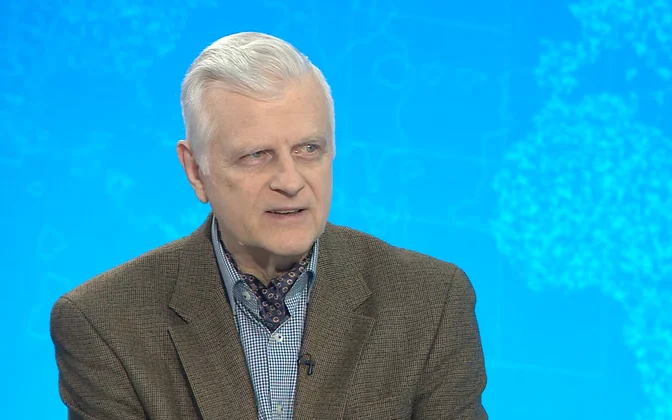
The tactical utility of light fighter jets extends well beyond intercepting advanced drones. Former Air Force commander Vello Loemaa elaborated on the specific operational niche these smaller aircraft would occupy, particularly in neutralizing loitering munitions that cruise at varying speeds.
"These aircraft need to be used against drones with speeds ranging from just over 100 to 600 kilometers per hour," Loemaa stated. He noted that despite the difference in platform size and cost, the operational chain remains fundamentally consistent with traditional air defense engagements. "The rest of the process—everything involved in engaging a drone, from detection to destruction—is exactly the same as with larger fighter aircraft."
Integrating light fighter jets into the Estonian Air Force would also require a careful assessment of human resources and pilot preparation. Estonia currently has qualified pilots capable of operating light aircraft, but their existing training curricula do not encompass the tactical skills required to engage airborne targets dynamically.
"We have the expertise needed to provide further training," Loemaa acknowledged, pointing to the foundational competencies of the current pilot corps. "But we lack expertise in the specific field of engaging aerial targets."
Building a functional squadron would require acquiring around a dozen fighter jets, with specialized tactical training programs estimated to take between one and two years to complete. Despite these preparatory requirements, Minister Herem remains optimistic about the feasibility of the timeline, suggesting that the entire acquisition could be realized within a four-year window, or potentially even sooner depending on market availability and regional security developments.
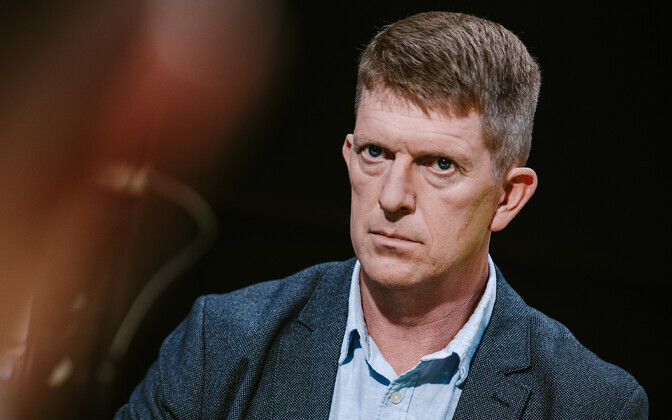
"Where and when exactly we will procure them is still quite unclear at the moment. The same goes for where they will be based. But there are certain tasks for which we have no other good alternative," Herem said, underscoring the operational necessity driving the initiative.
The conversation surrounding a sovereign fighter jet capability is not entirely new within Estonian military history. The leadership of the air force has intermittently planned for the acquisition of fighter jets for decades. However, historical efforts were frequently hampered by institutional challenges, including limited lobbying capacity and a lack of specialized foresight regarding modern aerial threats.
Reflecting on past strategic shortcomings, Loemaa offered a candid assessment of the defense sector’s long-term planning. "I would also say there has been a lack of expertise. What is happening now in the war in the skies over Ukraine could have been foreseen. But better late than never, now that this knowledge is reaching others as well."
Regional defense cooperation has historically offered a framework for joint military development among the Baltic states. Loemaa recalled that cooperation between the Baltic navies successfully gave rise to BALTRON, a joint naval squadron designed to clear sea mines and enhance maritime security. Similarly, the region’s air forces previously discussed the creation of a joint air squadron concept known as Baltwing. Ultimately, however, recurring shortages of resources, divergent national priorities, and a lack of unified planning frameworks prevented those broader regional air defense initiatives from fully materializing, leaving individual nations to address capability gaps through national procurement strategies.