In October 1972, a seismic shift in architectural theory occurred with the publication of Learning from Las Vegas. Authored by Robert Venturi, Denise Scott Brown, and Steven Izenour, the seminal text challenged the architectural establishment to reconsider the underappreciated and largely dismissed commercial landscape of the United States. Rather than viewing the neon-lit strips, billboards, and casinos of the American West as vulgar or devoid of taste, the authors urged their peers to study them as vibrant manifestations of popular culture and vernacular design.
At the heart of the book lay a famous distinction that would forever alter how buildings are conceptualized: the "duck" versus the "decorated shed." The "duck"—named after a famous poultry-shaped roadside stand—represented a building whose physical form literally communicates its function and meaning. In contrast, the "decorated shed" was defined as an ordinary, conventional structure whose identity and messaging are conveyed not through its structural form, but through applied signs, symbols, and ornamentation. This critical framework directly questioned the widely accepted modernist assumption that architectural expression should emerge strictly from functional necessity and structural truth. By examining the visual languages of American consumer culture, Venturi, Scott Brown, and Izenour argued that architecture could—and perhaps should—communicate with the public on a more direct, symbolic level.

While postmodernism is widely understood today as a direct rejection of traditional modernist promises, its relationship with American capitalism was far more complex than a simple rebellious design movement or a rigid pushback against corporate interests. Modernism had long provided American corporations with a powerful, authoritative visual identity. For decades, sleek glass towers, unornamented steel frames, and minimalist interior design were inextricably linked with corporate efficiency, progress, and institutional authority. Glass skyscrapers projected transparency and forward-thinking power, serving as physical embodiments of mid-century industrial might.
What postmodernism ultimately offered to architects and corporate clients alike was a radical reframing of how buildings could communicate meaning in a changing world. This evolution arrived precisely at a time when corporate differentiation, consumer identity, and the symbolic value of products were becoming central to the operations of American businesses. As corporations sought new ways to stand out in an increasingly competitive marketplace, the ironical, historical quotations and playful ornamentation of postmodern architecture provided a fresh vocabulary. Buildings could suddenly tell stories, reference historical eras, and adopt playful personas that aligned with branding strategies.
This intersection of commercial ambition and architectural theory transformed the built environment across the Unitedest States. Landmarks such as the Piazza d’Italia in New Orleans and the Portland Building designed by Michael Graves demonstrated that architecture could embrace color, classical references, and sculptural whimsy. These structures moved away from the austere neutrality of high modernism, introducing a visual language that resonated with the public’s appetite for narrative and spectacle.

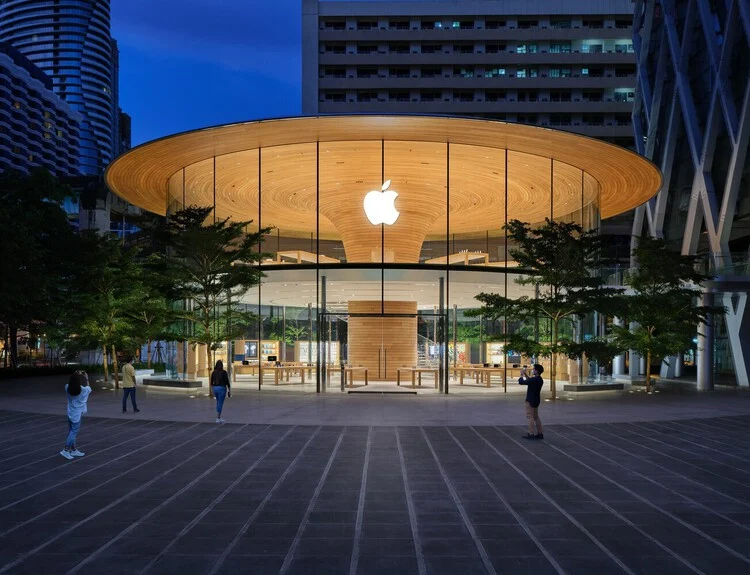
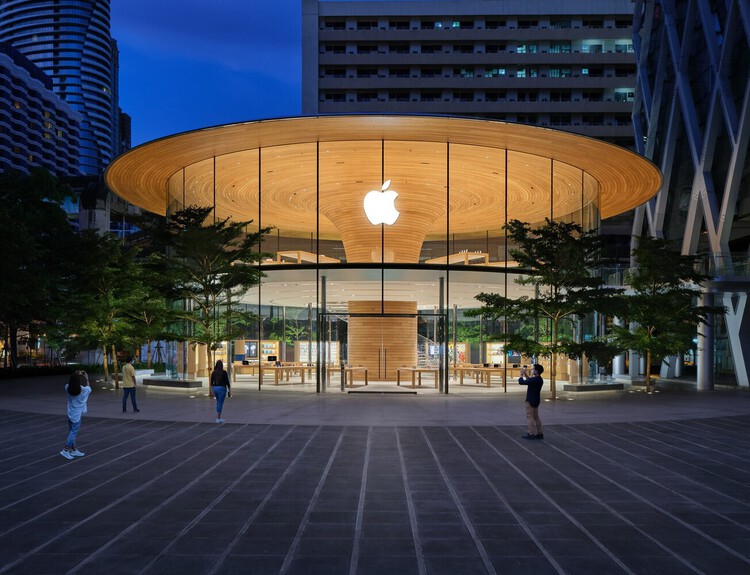
Over the decades, this dialogue between architecture and commerce evolved beyond traditional masonry and stone postmodernism, manifesting in contemporary corporate and retail environments. Global brands, tech giants, and commercial enterprises continued to adapt the foundational lesson of the decorated shed and the symbolic building. From flagship retail spaces designed by prominent firms like Foster + Partners—such as Apple stores in Bangkok, Istanbul, and Beijing—to corporate headquarters that prioritize brand identity and experiential design, the legacy of looking closely at capitalism endures.

Ultimately, the marriage of postmodern architectural theory and American business reshaped the urban landscape. By learning from the commercial strip rather than ignoring it, architects and corporations forged a new communicative medium, proving that buildings could do much more than just house functions—they could speak the language of consumer culture.