Jio Platforms, the digital services and telecommunications giant spearheaded by billionaire Mukesh Ambani and backed by global technology heavyweights Meta and Google, experienced a stellar market debut on Wednesday. The company’s stock surged 21% following a historic initial public offering that raised $3.2 billion. The offering stands as India’s largest and most heavily subscribed IPO to date, drawing an overwhelming response from the investor community and pulling in more than $77 billion in total bids.
The company’s shares opened trading at ₹1,358, approximately $14, marking a strong upward shift from their initial public offering price of ₹1,119, or around $12. This opening jump propelled Jio’s market valuation to an estimated ₹12.5 trillion, which translates to roughly $131.9 billion. With this valuation, Jio firmly established itself as India’s second-most valuable listed corporate entity. It trails only its parent company, Reliance Industries, which commands a market valuation of approximately ₹16 trillion, or around $168.6 billion. The growth represents a remarkable escalation from 2020, when major investments from Meta and Google valued Jio Platforms at up to ₹4.91 trillion, or about $65 billion at the time.
The landmark public offering ran from October 21 to October 22 and generated extraordinary demand across retail and institutional categories. According to official exchange data, the offering drew bids for an astounding 22.19 times the total number of shares placed on sale. More than 13.8 million individual applicants sought to secure allocations, shattering previous benchmarks. This monumental turnout made it India’s most subscribed stock offering on record, reflecting unyielding investor appetite and confidence in the long-term growth prospects of the country’s premier telecom and digital infrastructure provider.
Jio’s journey to market dominance began in 2016 when it fundamentally disrupted what was then a heavily crowded and competitive Indian telecommunications market. By introducing aggressive promotional strategies that included free data and low-cost services, the company rapidly captured market share, drawing millions of subscribers away from established legacy operators, including Bharti Airtel, Vodafone Idea, and state-owned BSNL. In the years since, Jio has grown to become India’s largest telecom operator by a wide margin.
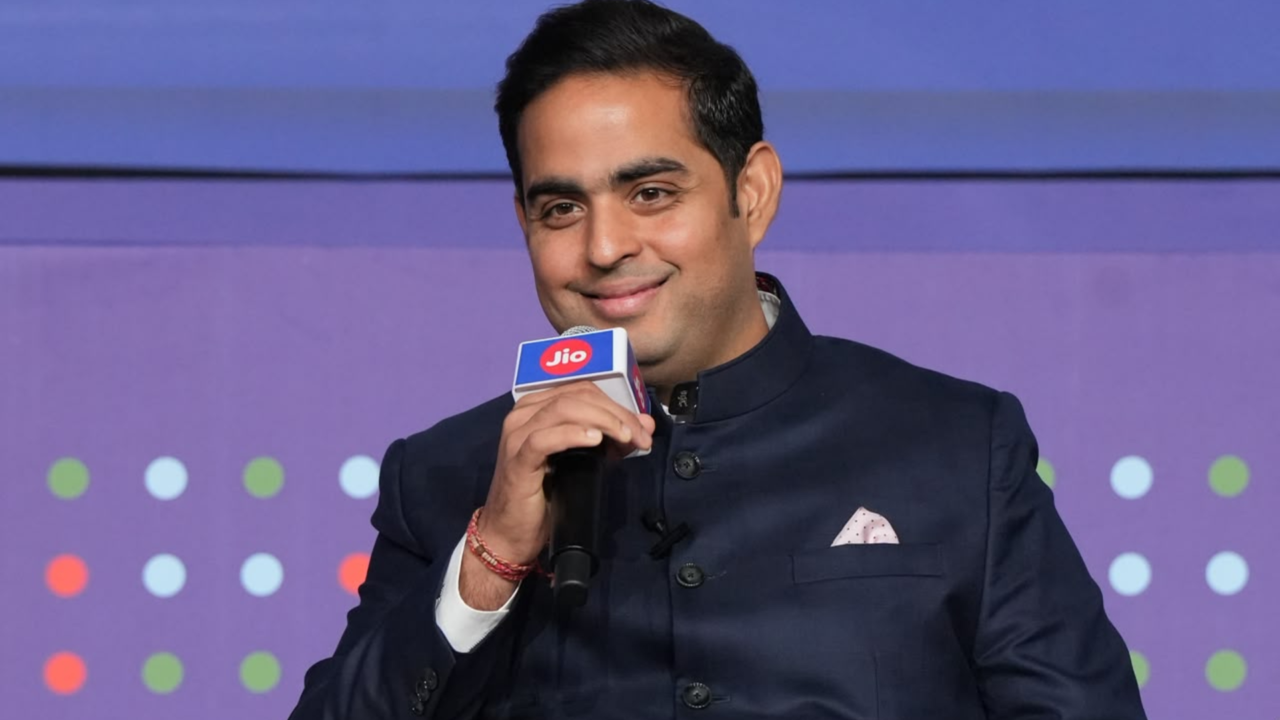
During Wednesday’s celebratory listing ceremony, Akash Ambani, the managing director of Jio Platforms and eldest son of Mukesh Ambani, addressed attendees to highlight the scale of the operation. He noted that Jio’s diverse digital platforms now actively serve a massive consumer base exceeding 540 million customers. While Jio’s current pricing models are now broadly aligned with those of its primary market rivals, the company has successfully evolved far beyond basic connectivity. Over the years, its business operations have systematically expanded into high-growth verticals such as high-speed home broadband, advanced cloud computing services, and cutting-edge artificial intelligence infrastructure.
Akash Ambani has progressively assumed a more prominent leadership role within Jio Platforms as his father, Mukesh Ambani, gradually transitions operational responsibilities to the next generation of leadership at Reliance Industries. Speaking at the listing ceremony, the younger Ambani articulated an ambitious global vision for the firm. He shared his overarching ambition to transform Jio into a recognized global technology powerhouse, stating that his primary dream is for the world to eventually count a major Indian technology company among its elite, and for that enterprise to be Jio Platforms Limited.
Financial disclosures released alongside the public offering illustrate a robust financial foundation supporting this expansive vision. Jio reported a net profit of ₹300.5 billion, or approximately $3.2 billion, on total operational revenues of ₹1.47 trillion, roughly $15.5 billion, for the fiscal year that concluded in March 2026. Both financial metrics registered solid growth of about 15% compared to the previous fiscal year. This positive momentum persisted into the subsequent fiscal period, with Jio’s revenue registering a nearly 12% growth rate and net profit climbing 9% during the June quarter.
A substantial portion of the capital raised through the historic IPO is earmarked for strategic balance sheet optimization. Jio has outlined plans to allocate up to ₹275 billion, roughly $2.9 billion, of the IPO proceeds toward the complete or partial repayment of outstanding debt held by its core telecom subsidiary, Reliance Jio Infocomm. The remaining funds are designated for general corporate purposes to support ongoing technological expansion and infrastructure upgrades. As of June 30, Jio carried total borrowings amounting to ₹613.7 billion, equivalent to approximately $6.5 billion.
The public market debut also underscores the long-term value created by strategic international partnerships forged during the COVID-19 pandemic in 2020. At a time of intense global economic uncertainty, Jio successfully secured billions of dollars in strategic investments from prominent American technology giants and private equity firms. Meta, operating under its former name Facebook, committed $5.7 billion to acquire a stake in Jio Platforms, while search giant Google contributed $4.5 billion. Additional institutional backing came from major global investment firms, including General Atlantic, Silver Lake, and Vista Equity Partners. Notably, none of these early international backers elected to divest or sell their holdings during the IPO, which consisted entirely of newly issued primary shares designed to fund the company’s next phase of corporate growth.