Estonian media companies have issued a stern warning that upcoming business terms from United States tech giant Meta will allow the social media conglomerate to utilize professional news content without proper consent or financial compensation. The escalating dispute has prompted domestic media executives to urge the European Commission to take immediate regulatory action against the Silicon Valley firm, arguing that the changes threaten the fundamental economic models of modern journalism across Europe.
The contested updates, originally scheduled to take effect on October 30, have become the focal point of a broader European battle over intellectual property, artificial intelligence, and the immense market power wielded by digital gatekeepers. Following discussions with regulatory authorities, the European Commission announced that Meta has temporarily postponed the implementation of the new terms until November 20. However, industry representatives in Estonia maintain that this brief delay changes very little about the long-term threat posed to publishers.
The Estonian Association of Media Companies, known locally as the Eesti meediaettevõtete liit, has formally appealed to policymakers and national regulators over the revised framework. Under Meta’s proposed business terms, business users—a category that explicitly includes news publishers—would be required to grant the tech giant sweeping permission to access their web content through automated software tools. Once granted this access, Meta would reserve the right to index, store, search, and update that journalistic content for its own internal business purposes, all without requiring separate authorization or providing any form of financial remuneration to the creators.
The controversy initially flared when Meta sought explicit rights to harvest publisher content for the purpose of training artificial intelligence models. Following widespread protests and intense pushback from publishing houses, Meta removed the explicit word "training" from the text of the agreement. Despite this concession, the Estonian media association argues that the remaining language in the terms remains dangerously broad, leaving the door wide open for AI-related utilization regardless of the terminological tweak.
In the assessment of the media association, the revised terms directly threaten the viability of independent media business models. By granting Meta the legal clearance to ingest journalistic output, the tech company could potentially develop and power competing digital products derived directly from original reporting, while refusing to pay for the underlying raw material. Publishers now find themselves trapped in an untenable predicament, facing a stark and damaging choice: they can either grant Meta permission to use their content or risk losing an indispensable distribution channel for reaching their digital audiences.
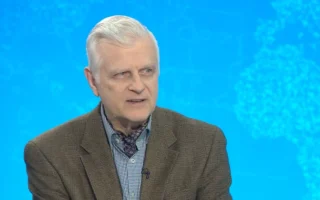
Väino Koorberg, a board member of the Estonian Association of Media Companies, did not mince words regarding the implications of the corporate policy change, describing the development as potentially representing the largest systemic theft of content in the digital era. The friction in Estonia mirrors a wider international outcry. In the United States, the News/Media Alliance, an influential trade association representing nearly 2,000 American publishers, has addressed a direct letter to Meta founder Mark Zuckerberg, demanding the immediate and unconditional withdrawal of the terms. Furthermore, at least four separate European publishers’ organizations have approached the European Commission with strikingly similar grievances and legal concerns.
Elaborating on the regulatory landscape, Koorberg emphasized the immense structural dominance that Meta exerts over the digital ecosystem. In the terminology of European Union competition law, Meta is officially classified as a major gatekeeper—an entity whose platform activities dictate the digital visibility and economic survival of countless other businesses. It is precisely because of this profound market asymmetry that stricter, more binding rules have been established for such platforms under EU legislation, Koorberg noted.
Compounding the crisis over content harvesting, Koorberg pointed out that Meta is simultaneously testing restrictive limitations on organic link sharing across Facebook. Under experimental restrictions flagged by publishers, users and outlets may soon find themselves limited to sharing only two links free of charge during any given month. Such measures severely degrade the utility of social media platforms as legitimate marketing channels for independent news organizations, cutting off vital referral traffic that media outlets rely upon to sustain their operations.
The Estonian media association warns that the unfolding situation poses a direct and tangible threat to public access to reliable, verified information. Statistics indicate that more than half of the general population relies on social media as a primary source for daily news consumption. By artificially suppressing the visibility of professional journalism on these platforms, the public becomes increasingly vulnerable to unverified rumors, partisan manipulation, and digital disinformation.
To combat this aggressive corporate stance, Koorberg suggested that Estonia should project a clear, unyielding message from the highest levels of government. For instance, he proposed that state institutions could proactively end their official cooperation with Meta and withdraw entirely from its platforms, noting that the sweeping changes in business terms affect government entities and public communication just as acutely.
Addressing the regulatory stance, Elis Paemurd, deputy head of the European Commission Representation in Estonia, confirmed that Meta had postponed the contested terms to November 20 following constructive discussions. Paemurd added that the European Commission is closely monitoring the situation to ensure that Meta remains in strict compliance with all applicable European Union laws, including the strict statutory prohibitions against the abuse of a dominant market position.
Despite the temporary reprieve offered by the postponement, Koorberg remains deeply skeptical that the pause signals any genuine retreat by the technology giant. Meta’s own stated rationale for the delay is that it wishes to further specify and clarify how the new terms should be interpreted. However, media analysts suspect this maneuver may simply represent a tactical step toward neutralizing potential legal challenges or antitrust scrutiny from European regulators. In response, the Estonian media association has formally advised its member organizations to monitor developments with extreme vigilance, keeping open the possibility that the most radical and final step may be a complete decoupling from all of Meta’s commercial products and services.